

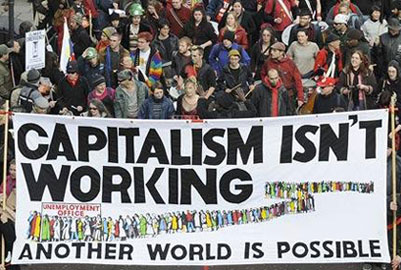
Since last year’s banking and financial crisis regulation is being seen in a much more positive light. Indeed among more and more business people it is viewed as a prerequisite for a functioning global economy.
A recent survey from the Economist Intelligence Unit has found that almost two-thirds (65%) of respondents agreed with the statement: “I am in favour of further bank regulation, even if the result is slower economic growth”
It is one of the findings of an EIU survey entitled Risk and regulation: A new era for capitalism. In the survey, nearly 60% of 418 global senior executive respondents agreed with the suggestion that last year’s banking crisis has “fundamentally changed capitalism.”
One respondent said: “Much as the Great Depression did in the 1930s, this crisis will permanently change the way governments and businesses view the world.”
The report examined the shape of the new landscape, how management decisions will change as a result and whether business people support measures taken by government to stem the crisis.
The executives surveyed said they foresee increased government oversight of business and finance, more economic nationalism, less risk-taking and slower growth. Decision-making within businesses is expected to reflect a new reality, as frugal customers and state regulators continue to hold greater sway.
Respondents said they supported taxpayer funded bank bailouts, but few said they would welcome the outright nationalisation of other key industries, the creation of so-called “bad banks” or limits on executive pay and bonuses (little surprise there).
“The survey shows how much the economic downturn has alarmed the business community,” says Robin Bew, editorial director and chief economist at the Economist Intelligence Unit. “Many respondents believe the psychological effects of this recession will last far into the next recovery. They expect they will need to adjust to a world of conservative banking, frugal customers and more active regulators for some time to come.”
Respondents said that their faith in free markets and Adam Smith’s “invisible hand” had been shattered by the banking crisis.
46% said they believe that when the recovery comes, there is unlikely to be return to the finance-driven economy of the past, with easy credit fuelling investment and asset price bubbles. The report also said that employees, non-governmental organisations and trade unions would be left out in the cold, with large majorities believing their influence will wane or stay the same.
The majority of respondents said they expect that governments’ responses to the downturn, including printing money and economic stimulus packages, will have a beneficial effect on their businesses. Only 17% thought the measures taken will have a negative effect on their long-term business prospects.
In many ways the research findings mirror the views of the Nobel prize-winning economist Joseph Stiglitz, who believes that “market fundamentalism” — the idea that the markets are always efficient and always know best — has been utterly discredited by what happened to the banking sector last year. But is it back to an era in which nanny knows best?
This blog was published on 14 May 2009