

The SNP-Green coalition in Scotland appears determined to press ahead with its highly-contested deposit return recycling scheme. The Scotch whisky industry fears chaos, reports Ian Fraser for WhiskyInvestDirect
On 16 August, the drinks market in Scotland enters a new era, when the country becomes the first in the UK to adopt a deposit return scheme.
From then on, anyone who buys a soft or alcoholic drink packaged in a single-use container made of PET, glass, steel, or aluminium, and sized between 50ml and three litres, will be required to pay a 20 pence deposit. They will get the money back when they return the empty receptacle to one of 30,000 reverse-vending machines and otherrecycling points around the country.

Scotland’s circular economy minister Lorna Slater describes the planned DRS as “one of the most environmentally ambitious” in Europe.
But few in the Scotch whisky or related industries are as positive. Many believe the scheme as planned will be an expensive flop, potentially driving many smaller drinks firms into bankruptcy, stifling innovation, reducing consumer choice, while actually being worse for the environment as it will limit the supply of recycled glass for bottle manufacturing.
There is also widespread frustration and concern about the Scottish government’s failure to listen to suggestions for improvement or complaints.
Alex Bruce, managing director of the Adelphi Distillery, whose brands include Ardnamurchan and Adelphi Collection, says the “Scotch whisky industry is 100% behind reducing carbon emissions and increasing sustainability, but this just isn’t the right way of doing it. We’re not anti-environment, we’re simply saying please, please let’s do it a better way.”
Bruce believes the Scottish government’s biggest error was to include glass, largely because glass recycling levels are already high – around 70% – in Scotland, but also because the glass retrieved from the DRS will be unusable in the production of new whisky bottles. “It will have been crushed to a pulp and end up being used for roadfill and the like,” said Bruce.
The Scotch Whisky Association (SWA) agrees, saying: “The industry wants to get the high-quality glass it needs for our premium product as locally as we can. That means having a reliable source of high-quality recycled cullet.”
Bruce cannot understand why Scotland has opted for such a complex and unwieldy scheme, saying it would have been better to have replicated one of the simpler schemes that exist in other European countries than to “drag us all into this horrendous morass”.
After a recent learning visit to Norway, Edward Bentley, category manager at cash & carry group J W Filshill wrote: “We should follow the success of our Scandinavian neighbours and stop trying to rewrite the DRS manual.” Norway’s world-leading scheme excludes glass.
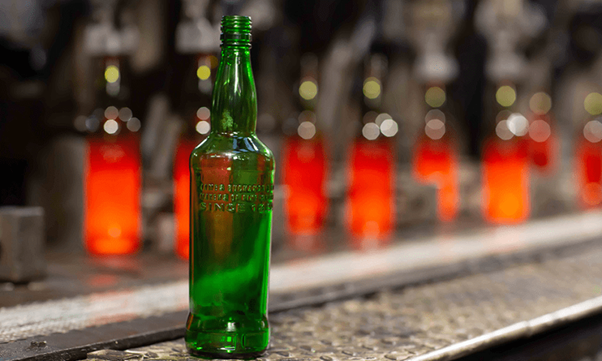
Bruce said due to margins within the value chain, the scheme is likely to add £1.50 to the retail price of a bottle of Scotch.
Meanwhile Innis & Gunn founder Dougal Sharp has warned the recycling scheme will double the price of beer in Scottish supermarkets compared to those in England while also creating a “grey market” with consumers criss-crossing the border to obtain supplies.
The scheme as planned may also reduce the options open to consumers. Sebastian Bunford-Jones, global marketing manager for the Glasgow Distillery said: “For the consumer in Scotland, there’s going to be a reduction in choice. It’s going to make things much harder for niche and low-volume products which may not see Scotland as a priority market.”
Bunford-Jones added: “What’s increasingly apparent is the scheme has not really been engineered for spirits – and especially not for low-volume, niche products. It’s very much engineered for high-volume, low-value products such as cans of soda, bottles of water, things like that. There’s been a lack of understanding of the intricate web of wholesalers and retailers in the UK marketplace.”
To comply with the scheme, drinks producers must register with Circularity Scotland, the government’s implementation partners, by February 28th, outlining the number of containers they anticipate selling into the Scottish market.
All retailers selling drinks covered by the scheme must also operate a dedicated recycling point – introducing a reverse-vending machine or an in-person arrangement, while online sellers must provide an online “takeback” service.
While there are exemptions, it means any distiller with a distillery shop or online store must provide return services. Annabel Thomas, CEO of Nc’nean Distillery, describes this as “a real challenge from a cost and logistics point of view, and also from a sustainability point of view”.
In a letter to a Scottish Parliamentary Committee on 15 December, Lorna Slater said the UK Treasury has yet to clarify whether VAT is going to be applicable to the 20p deposits paid by consumers but said she continues to press the Treasury on this. Bruce said the absence of any clarity on VAT is extraordinary when drinks companies are being strong-armed into signing a binding agreement in less than two weeks.
Retailers are also up in arms. On 1 February, the Scottish Retail Consortium, complained about an information vacuum regarding how the scheme will work in practice, demanding “a complete operational blueprint” from the Scottish government by 28 February if the proposed scheme was to avoid descending into chaos.
Even though a Scottish government Gateway Review Final Report in December 2022 identified “major risks” with the DRS, giving the proposed scheme an amber/red warning, stressing “further urgent activity” was required, and recommending a “softer” approach to implementation, the government is pressing ahead. This may be because the gateway report also said the Scottish government should “remain resolute, keeping its eye on the longer-term and central benefits identified for the programme – these are still achievable.”
A group of trade bodies including the SWA is urging Slater to provide an 18-month legal grace period for smaller drinks producers. The letter also asked Slater to amend the rules for online takeback.
However, Circularity Scotland CEO David Harris is confident that Scotland’s recycling scheme will be launched on August 16th as planned.
“The scheme will be ready,” Harris recently told BBC Radio Scotland. “We’re not saying it will be perfect on day one but we are saying it will be up and running on time.” A Scottish government spokesperson said: “We understand this is a big change, especially for smaller businesses, and have committed to a pragmatic approach to implementation.”
Bruce believes the best hope is that the scheme will be blocked by Westminster because it disrupts the UK’s internal market: “The Internal Market Act 2020 requires a level playing-field between the different parts of the UK, but the DRS is putting trade barriers. I‘ve heard rumours that Scottish secretary Alister Jack will do what he’s already done with the Gender Recognition Reform Act – block it with a Section 35 order.”
In such an event, Bruce doesn’t believe Scotland should waste time putting together a revised recycling scheme but should instead await Westminster’s UK-wide “simpler and more workable” scheme, which excludes glass, and which is expected in 2025.
Leonard Russell, managing director of Ian Macleod Distillers, makers of Tamdhu and Glengoyne single malts, says: “I really don’t understand the Scottish government’s motive for going it alone and doing it differently from the rest of the UK. Is it just political nonsense?”
Or is it simply ‘pour épater le bourgeois’, as the Decadent poets said in in France? “We’re annoying all the right people,” proclaimed a recent headline above a grinning portrait of Lorna Slater.
This article was published by WhiskyInvestDirect on 10 February 2023