

The Bank of Scotland was in a bullish mood last night, as its £22 billion hostile bid for NatWest was looking increasingly likely of winning acceptance from its target’s shareholders.
However, fund managers warned that BoS may need to increase its offer if it is to achieve its goal of becoming the UK’s third largest bank.
The mud thrown last week by NatWest chairman Sir David Rowland at his Scottish aggressors appears not to have stuck, as the shortfall between BoS’s offer and NatWest’s stock market value narrowed on Friday to its lowest level since hostilities were declared on September 24.
Sir Peter Burt, chief executive of Bank of Scotland, said: “The market’s verdict on NatWest’s defence is clearly shown by the relative share prices over the last three days.”
The narrowing of the gap —which fell from 10% to 3% following the publication of NatWest’s defence document on Wednesday —makes it is increasingly unlikely that rival bidders will emerge.
Viscount Younger, chairman of the Royal Bank of Scotland, is rumoured to have blocked chief executive Sir George Mathewson’s ambitions to mount a counter-bid for NatWest. Effectively this means that BoS and its English prey are now “eyeball to eyeball”.
In its defence document, released last Wednesday, NatWest said it was confident that its plan to slim down and go it alone would create more shareholder value than the Bank of Scotland’s bid, which it said was “unrealistic and inadequate”.
NatWest reaffirmed its plan to shed 10,000 retail banking jobs by 2001 and said 1000 jobs would go in restructuring its head office and 650 in corporate banking. It urged shareholders to reject what it said was a bid based on unrealistic assumptions about cost savings.
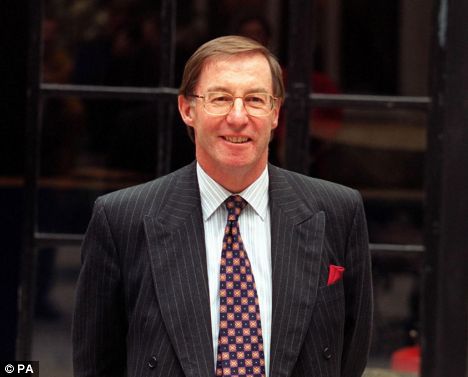
Peter Burt’s BoS: A catalyst or change
The Bank of Scotland, led since 1996 by Peter Burt, responded by saying the defence did nothing to undermine “the compelling logic” of its offer.
NatWest’s defence met with little enthusiasm in the City. Fund managers said NatWest had failed to win the initiative and were unimpressed by Sir David’s insistence that his bank has not been approached by any “white knight” — and that it was not looking for one. They had hoped NatWest would search out a higher bid from a friendly third party rather than struggle to remain independent.
Peter Burt said: “The only interesting or new thing in the defence document was the bit about their management incentive scheme. The other interesting comment, from Sir David Rowland, was that he is finding it ‘lonely being the only man on his soapbox’ trying to bring about change at NatWest. But why does he talk about our offer as a catalyst for change, then reject us as a catalyst?”
Nonetheless, Peter Burt and Gavin Masterton, BoS’s chief operating officer, are aware that there is no room for complacency.
So far the bid battle has largely revolved around who can cut the most jobs at NatWest. This is unlikely to be seen as an edifying spectacle by the regulators, notably Dan Cruickshank, whose priority is to ensure entrepreneurial businesses have sufficient funding and that customers enjoy low and transparent charges. Trade unions, too, are beginning to feel that they are being left out of the loop.
There is also the danger that the Office of Fair Trading could refer BoS’s bid to the Competition Commission, which means it would have to lapse.
This would give NatWest three months to shore up its defences. However, Friday’s press report that a referral was imminent has been dismissed by the OFT as “pure speculation”. Others believe it may have been “Don Cruickshank’s spinning”.
The chances of Bank of Scotland’s hostile bid for NatWest succeeding are now largely dependent on upward swings in the Mound based bank’s share price, so the bank will be seeking as much “positive newsflow” as it can muster in coming weeks. The arrival last week of Alex Pagett as head of media and investor relations comes at a fortunate time.
NatWest will, for its part have, to come up with a more complete case for remaining independent, which it must issue to its shareholders by 22 November at latest. It will probably tell them how much they will realise as a special dividend from its proposed asset sales. Analysts estimate that the four units that have been earmarked for sale could fetch between £3.5 billion and £5 billion.
This article on Peter Burt’s attempts to takeover NatWest, bylined Ian Fraser and Kenny Kemp, was published in the Sunday Herald on 31 October 1999