

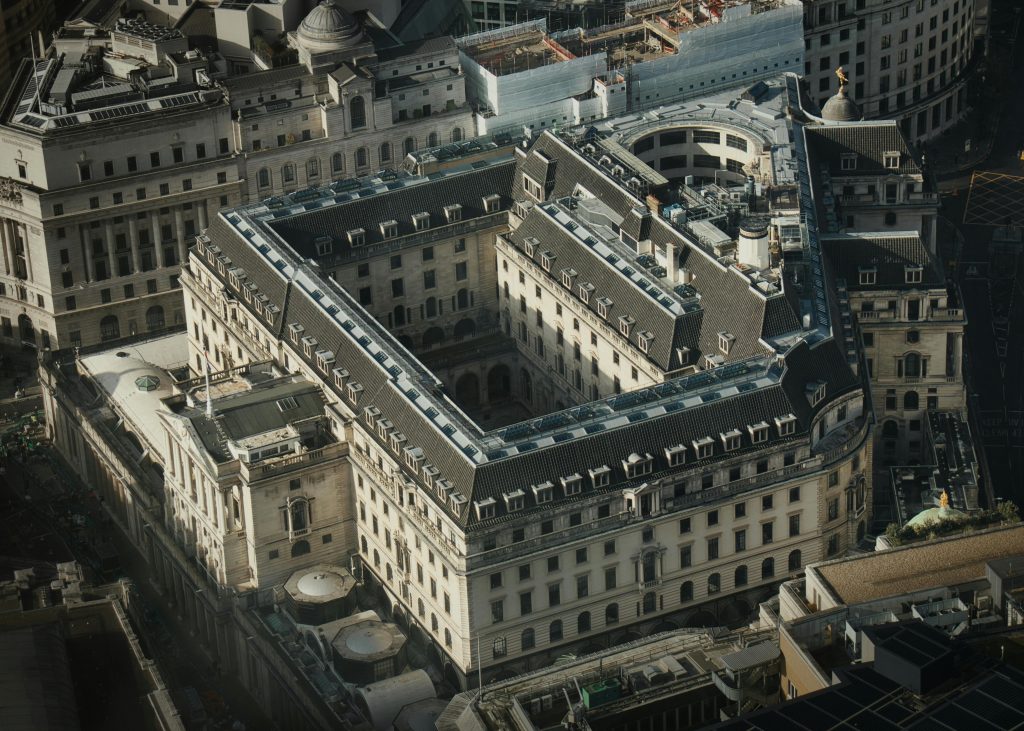
The response of the Old Lady of Threadneedle Street to the summer’s credit crunch – which again tightened its grip on the wholesale capital markets last week – has been at odds with those of central banks in Washington DC and Frankfurt am Main.
Whereas the US Federal Reserve and the European Central Bank (ECB) have both taken the knife to interest rates in an attempt to stave off economic collapse, the Bank of England has been resolute about doing nothing.
Indeed, having raised the UK base rate to 5.75% on July 5, the Bank of England has been quite happy to leave it there.
And several members of the bank’s monetary policy committee (MPC) last week said they could see scant evidence of any economic slowdown yet and seemed confident there would be a soft landing. But where on Earth were they looking?
These rate-setters have not only given UK consumers among the highest borrowing costs in the Western world, they seem oblivious to the fact we are teetering on the brink of a major consumer-led slowdown, coupled with a near-certain correction in the housing market.
Last week, there were figures from building society Nationwide suggesting the fastest drop in UK house values since 1995.
The Bank of England’s “see no evil, hear no evil” stance is, among other things, severely hurting exporters. They are having to contend with an exchange rate to the US dollar of $2.10 to the pound – which has severely undermined the competitiveness of products such as Scotch whisky in many global markets.
So what is driving the Bank of England’s solitary stance? In an unusually frank exchange with MPs from the House of Commons Treasury Select Committee, Bank of England governor Mervyn King last week laid some of his cards on the table.
In the process King gave the “doves” — the minority of MPC members, including David Blanchflower, who favour pre-empting the now near-inevitable downturn in the UK economy — little cause for hope.
The spectre that’s haunting Bank of England interest rate thinking
King warned of “rather uncomfortable” times ahead, with a “big risk” the credit squeeze could intensify. He said the “sheer uncertainty” and fear of what might still be found on the balance sheets of US banks is driving inter-bank lending back up to rates not seen since the height of the credit crunch. But his key words were: “In recent months, the near-term outlook for both inflation and growth has become less benign.”
Ah, there’s the rub. The outlook for growth may not look particularly positive, but the thing that is driving the inaction of the Old Lady is fear of inflation. And this is no imaginary fear.
Andrew Sentence, a part-time professor at the University of Warwick and member of the MPC, last week told the select committee that fear of inflation is now haunting the MPC and influencing its every move.
Sentence said: “We will need to weigh the evidence on the extent and likely duration of the slowdown in UK growth against the impact of inflationary pressures coming through from the global economy and their potential impact on inflation expectations. We might be less sanguine about the impact of this further oil shock. The shock itself has been more severe.”
The crippling disease of inflation is again beginning to creep back into the UK economy. Last week the Confederation of British Industry (CBI) said prices on the high street are soaring at their fastest rate in almost a decade. And this time this menace is not being ushered in by recalcitrant trade unions, as it was in the 1970s, but because of rising raw material costs.
The biggest single contributor is oil, which averaged $20 per barrel from 1986-2001 but has since hit $100 a barrel.
There have been three main reasons for the rise: the 15 years of ultra-cheap oil gave oil firms little incentive to invest in finding new supplies; demand for oil has surged as nations such as China and India have industrialised; and a severe shortage of equipment and personnel has made it very difficult for firms to find more oil and increase supplies at short notice. Many forecasters now predict oil will remain above $100 for at least three years, and SVM Asset Management founder Colin McLean predicts it will soon rise to $120 per barrel.
The outlook for inflation is worsened because manufacturing nations like China are no longer going to export deflation (for example, through cheap DVD players and iPods) as they have done. Instead they are expected to start exporting inflation — partly because of their own rising labour costs.
Already the retail price index (RPI) – a more accurate measure of inflation than the Consumer Price Index (CPI) that it replaced in 2003 – stands at 4.2%.
In this context, the MPC seems to be more sensitised to inflation than either the Fed or the ECB. In the near term, it definitely looks more likely to prioritise controlling inflation (its principal remit) than prop up an ailing economy by doling out cheaper money.
In my view, interest rates will probably therefore have to rise before they fall. Whether that leaves our economy and housing market in ruins is anybody’s guess.
The green shoots of recovery are still a long way off and may not be seen until 2009 although there are some positive signs. As the Centre for Economics and Business Research (CEBR) points out, the fundamentals of the UK economy are far stronger than in the last recession of 1989-92.
At that time, interest rates hit 15%, unemployment soared to 9%, and over a three-year period the economy shrank by 0.4%. Even though we will continue to be buffeted by post-credit crunch squalls and inflationary pressures, in a paper published today the CEBR does not believe 2007-09 is going to be anywhere this bad. Indeed the forecasting group predicts UK growth will hold up at 1.5% to 2% next year.
If the Bank of England does prioritise reining in inflation rather than providing short-term economic aid, as I suspect it will, even that may turn out to be optimistic.
The article was the main business comment in the Sunday Herald on 2 December 2007