

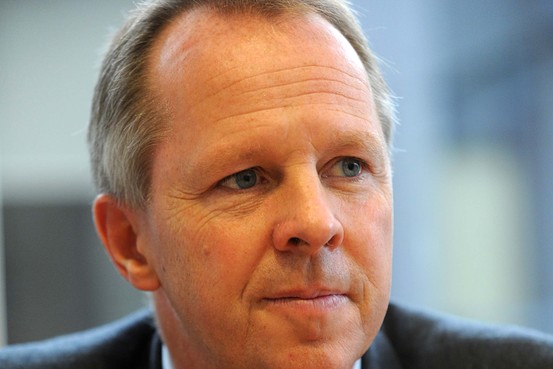
The coalition government is reverting to type where appointments to UK Financial Investments, the vehicle established by the Labour government to hold the public’s stakes in lenders including Royal Bank of Scotland (owner of NatWest, RBS, Ulster Bank, Coutts, etc) and Lloyds Banking Group (owner of Lloyds Bank, Bank of Scotland, Halifax, Scottish Widows etc) — is concerned
Most of the people who work for this hybrid investor are “chinless wonder” former investment bankers.
Despite Treasury spin about UKFI being “Fidelity with nukes” their approach to managing and husbanding the public’s stakes in the UK’s nationalised banks is akin to that of a Victorian absentee landlord.
As long as the banks turn in a profit and can be re-privatised quickly, they don’t really care how this is achieved.
This became crystal clear on 9 March 2010 when UKFI’s chief executive, Robin Budenberg admitted to the House of Commons Environmental Audit Committee that his organisation doesn’t given a damn if the banks that it owns make their money in unsustainable ways, for example by funding environmentally destructive energy sources such as tar sands. (A full video of that extraordinary session, can be viewed here)
Jaws dropped when Robin Budenberg confirmed UKFI’s apathy
Jaws dropped among the members of the Environmental Audit Committee that day, including that of its chairman Tim Yeo, when Robin Budenberg admitted that UKFI is among the most passive of investors, whilst conceding that all it really cares about is the short-term performance of the RBS and Lloyds share price.
Watching Robin Budenberg and his colleague Sam Woods at the committee hearing was a depressing experience. The pair seem to be throwbacks to the Friedman-esque 1980s, before awareness of corporate and social responsibility even existed — and short-term financial performance was all that mattered.
In other words, the people who run UKFI and the UK government are desperately clinging to the wreckage of the myopic value system that got us into this mess in the first place.
The performances of the two in-denial dinosaurs at the committee session made it clear that the British government has learnt nothing from the banking and financial crisis, and underlined the scale of the opportunity missed by Gordon Brown when he nationalised the UK’s failed and failing banks without requiring any behavioural or structural changes in 2007-9.
As Yeo made clear, speaking to Bloomberg afterwards: “The evidence we received made it clear the Treasury was washing its hands of any responsibility to encourage the state-owned banks to operate any kind of environmental policy.”
And it’s not just total nonchalance to the environment. UKFI is also turning a blind eye to fraud. Even though it has been informed in detail of an alleged £1bn fraud inside HBOS’s corporate lending department on at least two occasions, the body prefers to bury its head in the sand where such matters are concerned (even though rooting it out would surely be in its own long term financial interests).
After the sorry spectacle at the EAC committee, you can imagine my disgust at today’s announcement that, even under the new Cameron-Clegg coalition government, UKFI has not changed its spots.

UKFI today announced it has appointed Jim O’Neil — one of a posse of Merrill Lynch investment bankers who advised RBS (alongside continental European banks Banco Santander and Fortis) on their catastrophic $100bn, €71bn acquisition of Dutch bank ABN Amro in 2007.
For his role in advising RBS and its consortium partners on the ABN Amro deal alongside Matthew Greenburgh and Andrea Orcel, O’Neil trousered a bonus of some £1m (modest compared to what they received). The fact that the deal destroyed at least three of the four banks concerned (RBS, Fortis and ABN Amro), cost the Belgian, British and Dutch taxpayers billions and helped tip the global economy into recession didn’t seem to matter to the likes of Greenburgh and O’Neil. All that mattered was their bonuses!
At UKFI, American-born O’Neil is replacing John Crompton, who has jumped ship to HSBC, as the quango’s head of market investments. His main role will be to maximise the value of the government’s shareholdings in the state-owned banks, including overseeing any future IPOs, which will necessitate the appointment of a raft of well-paid investment banks.
For this O’Neil is being paid the princely sum of £180,000 per year, plus bonus, significantly more than the salary of the prime minister David Cameron, who earns £142,500 (although Cameron also receives an MP’s salary), even though it is unlikely there will be any flotations or dribbling out of portions of the taxpayers’ stake in the foreseeable future.
One sincerely hopes that O’Neil’s understanding of value creation has changed somewhat since he helped destroy scores of billions of value for RBS shareholders three years ago.
- Watch a video of Robin Budenberg and Sam Woods giving evidence to the Environmental Audit Committee on 9 March 2010.
- Read the official transcript of the House of Commons Environmental Audit Committee session of 9 March 2010
This article was published on 19 July 2010
Phew! for a moment I thought it was the Goldman J O’Neil!
Seriously, why am I thinking of the current trend of companies in hiring hackers?
£180,000 isn’t a “princely sum” and it isn’t more than the Prime Minster earns, so why even start a sentence by saying that it is, when you are going to have to retract before the end of the sentence? It doesn’t make sense to compare salaries for pretty much any job with the PM’s salary. The premiership appeals to a particular type of person, who is content to be paid in power and status (plus the chance to rake it in after leaving office). The market value of PM’s power and status, if it could be bottled and sold to rich egomaniacs, would be millions a year, maybe tens of millions a year.
£180,000 is a tiny salary for a high end London job. Make of that what you will, but it is the reality, so even commenting on this chap’s salary as if it is the issue here is silly distraction. There are tens of thousands of jobs that are much more obviously high/over paid. Very likely this chap isn’t the right man for the job, but by playing the envy card you have just annoyed me and moved my focus from the substantive issues you raised elsewhere in the article.
Thanks for your comment, OC. With the benefit of hindsight I agree. “Princely sum” was indeed a stupid thing to say, and distracts from the main thrust of the article which is really about ideology and missed opportunities. I was influenced by a blog post written by Sky News’ Mark Kleinman which majored on O’Neil’s salary!
Interested to note that the Evening Standard’s City Spy column has followed up on this blog post
http://www.thisislondon.co.uk/standard-business/article-23858576-city-spy-peter-mandelsons-just-mad-about-the-foy.do
Pingback: Ian Fraser - Business and Financial Journalist Ian Fraser » Blog Archive » RBS under siege over “environmental vandalism”
Pingback: Ian Fraser - Business and Financial Journalist Ian Fraser » Blog Archive » What really happened at Bank of Scotland Reading?
Pingback: Semi-Nude Parliamentary Candidate Protests Against Banker Pay At RBS AGM « naked capitalism
Pingback: Semi-Nude Parliamentary Candidate Protests Against Banker Pay At RBS AGM « naked capitalism « burkebrunson
Pingback: Late Lunchtime Links: On the doom at Nomura | Job news & advice | eFinancialCareers