

The Merrill Lynch investment bankers who advised RBS, Santander and Fortis on their joint €71bn takeover of ABN Amro have received massive bonuses for the deal — even though it destroyed three of the four banks involved
Merrill Lynch put together the disastrously overpriced 2007 deal, after persuading three European banks, RBS, Santander and Fortis, to join forces and make the biggest banking takeover in history. It must have seemed like a good idea at the time, and it was certainly extremely lucrative for Merrill. The fees were reportedly £600 million.
Astonishingly, the US investment bank still thinks the ABN deal was in its clients’ best interests. Yet for the price that Sir Fred Goodwin, Emilio Botin and Jean-Paul Votron paid for ABN Amro ($100bn), they could today snap up Citibank ($22.5bn), Morgan Stanley ($10.5bn), Goldman Sachs ($21bn), Merrill Lynch (£12.3bn), Deutsche Bank ($13bn) and Barclays ($12.7bn) and still have $8bn change. With that they could have picked up General Motors, Ford, Chrysler and the Honda Formula 1 Racing Team.
Not only did the deal cripple at least two of the three banks involved, requiring taxpayers to part with billions to keep them afloat, it also probably played a part in tipping many economies into prolonged recession.
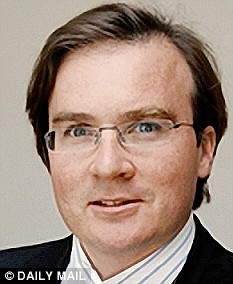
Yet one of the initiators of this fiasco, Merrill Lynch’s “head of financial institutions” Matthew Greenburgh, recently trousered a bonus of $10 to $20 million for his role in the deal.
On Monday, prime minister Gordon Brown said “people have a right to be angry” at the “wrong investments” made by RBS while Goodwin was chief executive, and particularly the massive £15bn to £20bn write-offs incurred as a result of the ABN Amro deal.
Maybe Brown should be directing his wrath at Matthew Greenburgh rather than his scapegoat of choice, Fred the Shred?
After all, Greenburgh was the fee-hungry Svengali who egged on the naive but ambitious Goodwin to make a string of other overpriced takeovers of banks and other financial institutions between 2000 and 2007. Greenburgh didn’t seem to give a monkeys whether the deals were good or bad for RBS. All he wanted to do was earn massive fees for Merrills, and huge bonuses for himself.
During the takeover of NatWest in 1999-2000, Greenburgh used “dirty tricks” to secure a deal, having persuaded the Takeover Panel to accept the notion of “conditional acceptances” — an irregular manoeuvre that infuriated Bank of Scotland’s chief executive Sir Peter Burt and is seen as having enabled RBS to clinch the takeover.
RBS earlier this week confirmed it will report a full-year loss in February which could hit £28 billion — with £15bn-£20bn ascribed to goodwill write-downs on the ABN Amro deal — and it is the taxpayer who is picking up the tab.
Fortis has also had to be bailed out at Belgian and Dutch taxpayers’ expense. The third bank involved in the three way buy-and-split takeover of Madrid-based Banco Santander, got off more lightly, but still looks set to miss its $10bn profits target for 2008.
Other Merrill Lynch dealmakers who have in recent weeks received bonuses of at least £1 million each for their roles in the ABN Amro deal include Henrietta Baldock, Richard Slimmon, Meritxell Maestre, Jim O’Neil, Barry De Reuver, Rupert Hume-Kendall, Siddharth Prasad, Steven Black and Oliver Greaves.
Timothy Cobb, head of communications at Merrill Lynch International confirmed that all eleven individuals are still employed by Merrill Lynch but declined to comment on whether they had received bonuses.
It remains unclear whether the most senior member of the team, Merrill’s ‘head of origination’ Andrea Orcel — whose idea it was and who has admitted that, even at the time, he thought the whole scheme was a bit “crazy” — has opted to eschew his bonus. But, given the nature of these guys, that would seem extremely unlikely.
In an article published in November 2007, Siddharth Prasad, head of financial institutions, capital markets, and financing for Merrill Lynch EMEA, claimed: “This is the king of all hybrid capital-offerings. Like so much of this entire transaction, this will be remembered for its historic significance in serving clients.”
Really? Serving clients?
The bonuses are all the more obscene given that Merrill Lynch last week declared a record loss of $15.31bn for the fourth quarter, and that its former chief executive John Thain managed to sneak in the payment of $3bn to $4bn in bonuses to staff on December 15th — a few days before his bank was rescued from oblivion through the completion of a questionable takeover by Bank of America.
Last week’s terrible results from Merrill Lynch came within hours of Bank of America being thrown a $20bn lifeline by the US government, in addition to a taxpayer-funded guarantee of $118bn on potential losses on toxic assets inherited from Merrill.
In an interview with Euromoney magazine (since removed from the Euromoney website), Orcel said: “We changed our M&A philosophy a few years ago. We decided that if Merrill Lynch is to succeed in this business, we needed to create value. Instead of fighting for league table status by chasing lesser roles, such as providing fairness opinions, we chose to focus our efforts on providing advice that would genuinely help grow or strengthen a client’s business.”
Well, Andrea, you didn’t exactly achieve create much value with the ABN Amro deal, did you? No wonder some seasoned City types — the ones who still have some integrity — are today describing today’s generation of investment bankers as “vermin”.
Orcel added: “This could not have happened if we had not determined, as a firm, to try to create actual value for clients rather than merely the perception that we were doing so.”
You couldn’t make some of this stuff up!
See also this article I wrote for the Daily Mail, which was published on 24 January 2009
Brilliant article, mate. More people need to use your tone in this country. That’s what wrong with it. Too many public school boys thinking they know what’s best for everyone, especially their own pockets, and no-one ever cracks a light at them.
“Not only did the deal cripple at least two of the three banks involved, requiring the taxpayer to make massive infusions of to keep them afloat, it also tipped many economies into a prolonged recession”
Quite a bold statement at the end there!
I Banker, you’re right. I have today edited the original post to remove any suggestions of direct causality.
Ian Fraser
Good reading. Unfortunately I completely missed this article when it came out. Just one comment:
“Merrill Lynch put together the whole disastrous and overpriced transaction, having persuaded three banks – Fortis, RBS and ABN Amro – to join forces and make the biggest banking takeover in history. ”
The three banks were of course Fortis, RBS and Santander: ABN AMRO was the target. The other (not so) funny part of the story is that Santander, the only one to have survived, did so because it managed to sell the Italian ABN AMRO unit (banca Antonveneta) to the Italian Banca Monte dei Paschi di Siena (BMPS) for a staggering Eur 9 billions, just two months after having taken it over from ABN. Needless to say, BMPS currently is the least capitalized Italian bank (Tier I capital below 5%) and having serious issues of its own.
Thanks for that Sancho. I have now amended the error. Interesting about BMPS being crippled as a result of its Antonveneta purchase. I’ll certainly look into that.
This is quite funny. I am currently in a house three minutes away from Greenburgh’s own residence in Hampstead, and am actually good friends with his son, at Westminster School. To be fair, Matthew is clearly a bright guy who has done more good than bad for the economy.
Pingback: Ian Fraser - Business and Financial Journalist Ian Fraser » Blog Archive » Kraft’s Irene Rosenfeld a fruit & nut case?
Pingback: Ian Fraser - Business and Financial Journalist Ian Fraser » Blog Archive » Why investment bankers should head for the lifeboats
Pingback: Ian Fraser - Business and Financial Journalist Ian Fraser » Blog Archive » O’Neil appointment confirms UKFI’s warped priorities
Pingback: The media frenzy about RBS bonuses and Fred Goodwin’s knighthood is a sideshow | Mindful Money
Pingback: Are we finally to learn what really happened the night of the bank guarantee? - Page 14